
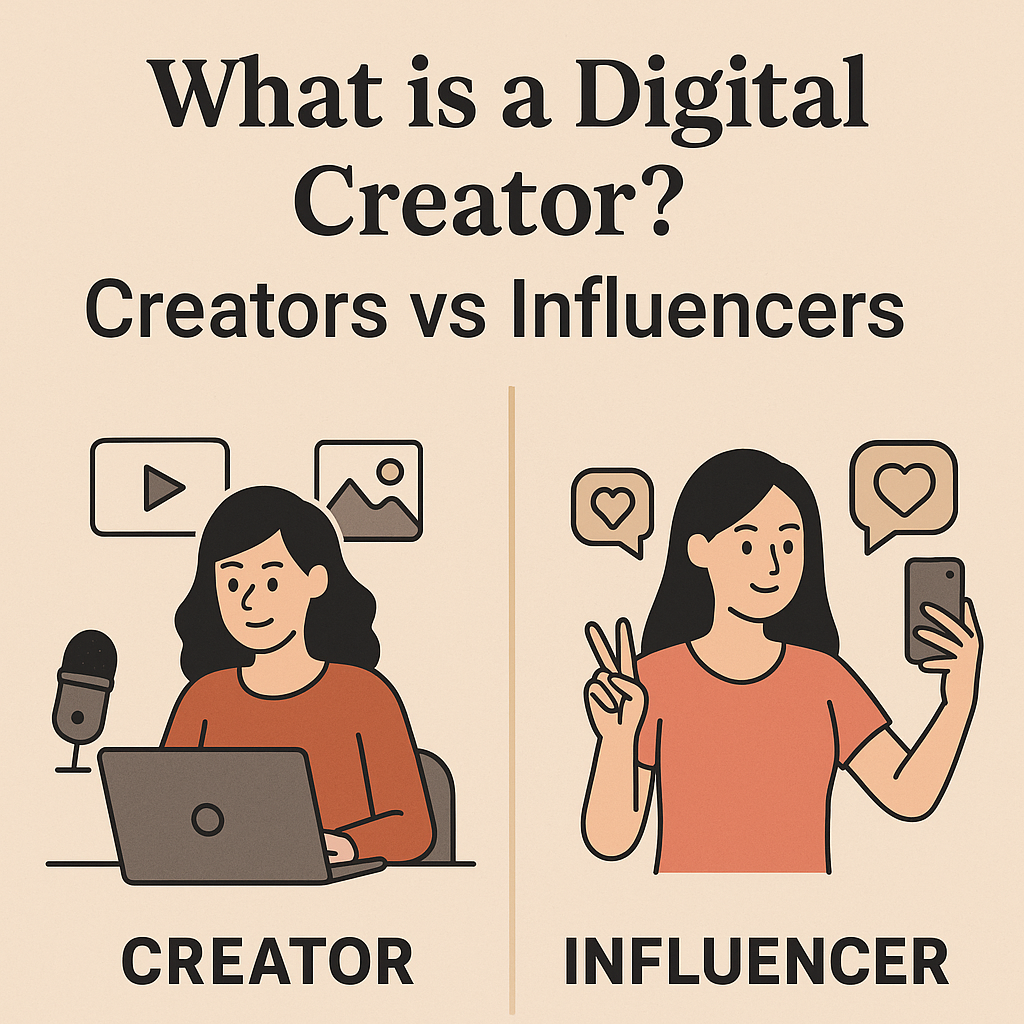
What is a Digital Creator? Creators vs Influencers
Introduction to the Digital Creator Economy:
Have you ever wondered what makes someone a “digital creator” versus an “influencer”? In today’s fast-paced digital landscape, these terms are thrown around like confetti at a New Year’s party, but they’re not just fancy buzzwords. The digital creator economy has exploded into a multi-billion-dollar industry that’s reshaping how we think about work, creativity, and making money online.
Think of the digital space as a massive playground where creativity meets commerce. Some people build the most amazing sandcastles (that’s your creators), while others are really good at getting crowds to come admire those sandcastles (hello, influencers!). But here’s the thing – the lines between these roles are blurrier than you might think.
What is a Digital Creator? – Defining the Modern Content Professional
A digital creator is essentially someone who produces original content using digital tools and platforms. They’re the architects of the internet, crafting everything from stunning visual art to educational videos, podcasts, blog posts, and interactive experiences. What sets them apart is their focus on creation itself – they’re driven by the desire to build, make, and share something new with the world.
Digital creators are like modern-day Renaissance artists, except their canvas is the internet, and their paintbrush might be anything from a smartphone camera to sophisticated design software. They’re not just posting random thoughts or photos; they’re deliberately crafting content that serves a purpose, tells a story, or solves a problem.
The beauty of being a digital creator lies in the creative freedom and control over your work. You decide what to make, how to make it, and where to share it. It’s like being the CEO, creative director, and production team all rolled into one person.
The Evolution of Digital Content Creation
Remember when “content creator” meant you worked for a magazine or TV station? Those days are long gone! The evolution of digital content creation has been nothing short of revolutionary. We’ve gone from needing expensive equipment and distribution deals to being able to create and share professional-quality content from our bedrooms.
The journey started with simple blogs and photo-sharing sites, but now we have creators producing full-length documentaries on YouTube, designing virtual reality experiences, and even creating NFT art that sells for millions. Technology has democratized creation, making it possible for anyone with a good idea and some determination to build an audience and make a living from their creativity.
Types of Digital Creators:-
Visual Content Creators
Visual content creators are the artists of the digital world. They work with photography, graphic design, illustration, animation, and visual storytelling. Think of Instagram artists who create stunning illustrations, photographers who capture breathtaking moments, or graphic designers who make complex information beautiful and easy to understand.
These creators understand that a picture really is worth a thousand words in the digital space. They use color, composition, and visual elements to communicate emotions, ideas, and stories that might be difficult to express through text alone.
Video Content Creators
Video creators are the filmmakers of the internet age. They produce everything from short-form TikTok videos to long-form YouTube documentaries, educational content, entertainment series, and live streams. What makes them special is their ability to combine visual storytelling with audio, creating immersive experiences that can educate, entertain, or inspire.
The video creation world is incredibly diverse – you’ve got vloggers sharing their daily lives, educators breaking down complex topics, entertainers making us laugh, and documentary makers tackling serious subjects. Each brings their unique perspective and style to the medium.
Written Content Creators
Don’t count out the power of the written word! Written content creators include bloggers, newsletter writers, copywriters, poets, novelists who publish online, and social media writers who craft compelling captions and threads. They understand that good writing can inform, persuade, entertain, and connect with readers on a deep level.
These creators might not have the flashy visuals or viral dance moves, but they’re the backbone of the internet. Every website, app, and platform needs good writing to communicate effectively with users.
Audio Content Creators
The audio renaissance is real! Podcasters, musicians, audiobook narrators, and sound designers are creating content that people can enjoy while commuting, exercising, or doing chores. Audio creators understand the intimate nature of their medium – they’re literally in their audience’s ears, creating a personal connection that’s hard to replicate elsewhere.
What Makes Someone an Influencer?
An influencer is someone who has built a significant following and can affect their audience’s opinions, behaviors, or purchasing decisions. The key word here is “influence” – these are people who have earned trust and credibility with their audience to the point where their recommendations carry real weight.
Influencers are like the popular kids in school who everyone listens to, except now the school is the entire internet, and instead of just talking about the coolest sneakers, they might be promoting everything from skincare products to investment apps.
What distinguishes influencers is their relationship with their audience and their ability to drive action. When an influencer says “this product changed my life,” their followers listen, engage, and often purchase. This influence is their superpower and their main value proposition to brands and sponsors.
The Key Differences: Creators vs Influencers
Content Focus and Purpose
Here’s where things get interesting! Creators typically focus on the craft itself – they’re driven by the desire to make something awesome, whether that’s a beautiful piece of art, an informative video, or an entertaining podcast. Their primary motivation is often creative fulfillment and artistic expression.
Influencers, on the other hand, focus more on building relationships and driving engagement. Their content is often lifestyle-oriented, personal, and designed to build trust and connection with their audience. They’re less concerned with creating the next masterpiece and more focused on maintaining their influence and relevance.
Audience Relationship
The relationship dynamics are quite different too. Creators often have fans who appreciate their work and artistic vision. Think of how people follow a musician because they love their songs, or subscribe to a YouTube channel because the creator makes amazing tutorials.
Influencers tend to have followers who see them as aspirational figures or trusted friends. Their audience is interested in their opinions, lifestyle choices, and recommendations. It’s more personal and intimate – like following a friend whose taste and judgment you really trust.
Monetization Strategies
This is where the rubber meets the road! Creators typically monetize through selling their work directly – whether that’s art prints, online courses, books, music, or premium content subscriptions. They’re essentially running creative businesses.
Influencers primarily monetize through their influence – brand partnerships, sponsored content, affiliate marketing, and endorsements. They’re selling access to their audience and their power to persuade and recommend.
Skills Required for Digital Creators
Being a successful digital creator requires a unique blend of creative and technical skills. First and foremost, you need to master your craft – whether that’s photography, video editing, writing, design, or audio production. But technical skills alone won’t cut it.
You also need to understand storytelling, audience psychology, and platform algorithms. Successful creators are also part-time marketers, brand managers, and business owners. They need to understand SEO, social media strategy, and how to build and maintain an audience.
Perhaps most importantly, creators need persistence and adaptability. The digital landscape changes fast, and what works today might not work tomorrow. Successful creators are always learning, experimenting, and evolving their approach.
Skills Required for Influencers
Influencers need a different skill set that’s more focused on people and relationships. Charisma and personality are huge – you need to be someone people want to follow and trust. Communication skills are crucial because your ability to connect with your audience is your main asset.
Influencers also need to be savvy about personal branding. They’re essentially building themselves as a brand, so they need to understand positioning, consistency, and how to maintain authenticity while working with sponsors and partners.
Business acumen is increasingly important too. Successful influencers need to negotiate contracts, manage partnerships, understand their metrics, and make strategic decisions about their career trajectory.
Platforms Where Digital Creators Thrive
Different platforms favor different types of creators. YouTube is fantastic for long-form video creators who want to build educational or entertainment channels. Instagram works well for visual creators, photographers, and artists. TikTok is perfect for short-form video creators who can capture attention quickly.
Platforms like Substack and Medium are great for written content creators, while Spotify and other podcast platforms serve audio creators. The key is understanding where your target audience spends time and what format they prefer consuming content in.
Many successful creators diversify across multiple platforms to reduce risk and reach different segments of their audience. It’s like not putting all your eggs in one basket – if one platform changes its algorithm or loses popularity, you’re not starting from zero elsewhere.
Platforms Where Influencers Excel
Influencers often thrive on platforms that facilitate personal connection and lifestyle sharing. Instagram Stories and posts are perfect for sharing daily life and building that aspirational following. TikTok’s algorithm can help influencers reach new audiences quickly with trending content.
YouTube is great for influencers who want to go deeper and build stronger relationships with their audience through longer-form content. Twitter works well for thought leaders and influencers in specific niches like tech, finance, or politics.
The platform choice often depends on the influencer’s niche and audience demographics. A fashion influencer might focus on Instagram and Pinterest, while a gaming influencer might prioritize Twitch and YouTube.
The Overlap: When Creators Become Influencers
Here’s where things get really interesting – many people are both creators and influencers! Think about a YouTube creator who makes amazing cooking videos (creator) but also partners with kitchen equipment brands because their audience trusts their recommendations (influencer).
This overlap is actually where some of the most successful online personalities live. They create valuable, original content that showcases their expertise, which builds trust and influence with their audience. It’s like being both the chef and the food critic – you make amazing food AND people trust your opinion about restaurants.
The most sustainable long-term approach might be to start as a creator and naturally develop influence as your audience grows and begins to trust your expertise and taste.
Monetization Methods for Digital Creators
Digital creators have numerous ways to turn their creativity into cash. Direct sales are often the most straightforward – selling art prints, digital downloads, courses, books, or music. Subscription models work well too, whether through platforms like Patreon or by creating premium content tiers.
Licensing is another great option, especially for visual and audio creators. You can license your work for use in advertisements, websites, films, or other projects. Service-based monetization works too – offering consulting, custom work, or creative services.
Many creators also build products around their expertise. A photography creator might sell presets and courses, while a business creator might offer consulting services or software tools.
Revenue Streams for Influencers
Influencers typically make money through their relationship with their audience. Sponsored content and brand partnerships are the most common – companies pay influencers to promote their products or services to their followers.
Affiliate marketing is huge too. Influencers earn commissions by promoting products they genuinely use and love. It’s performance-based, so everyone wins when the audience finds products they actually want.
Many influencers also create their own products – whether that’s merchandise, courses, books, or even launching their own brands. Their influence helps ensure these products have a built-in audience ready to purchase.
Building Your Path: Creator or Influencer?
So, which path should you choose? The answer depends on your personality, goals, and strengths. Are you driven primarily by the desire to create something amazing? Do you get excited about mastering a craft and pushing creative boundaries? The creator path might be for you.
If you’re naturally charismatic, love connecting with people, and are good at building relationships and trust, the influencer path could be your calling. But remember, these aren’t mutually exclusive – many of the most successful online personalities combine both approaches.
The best advice? Start with what excites you most. If you love creating, start creating and sharing your work. If you love connecting with people and sharing your experiences and opinions, start building that personal brand. You can always evolve and add elements of the other approach as you grow.
The Future of Digital Creation and Influence:
The future looks incredibly bright for both creators and influencers. As technology continues to advance, we’re seeing new opportunities emerge constantly. Virtual and augmented reality are creating new mediums for creators to explore. AI tools are making creation more accessible while also creating new categories of content.
The creator economy is becoming more sophisticated too, with better tools for monetization, audience building, and collaboration. We’re seeing the rise of creator funds, better revenue-sharing models, and more ways for creators and influencers to build sustainable businesses.
One trend to watch is the increasing importance of authenticity and expertise. Audiences are becoming more discerning, favoring creators and influencers who offer real value and genuine connection over those who are just chasing trends or quick money.
About Digital Creator Conclusion:
The distinction between digital creators and influencers isn’t about one being better than the other – it’s about different approaches to building value in the digital space. Creators focus on making amazing stuff, while influencers focus on building relationships and trust. Both are valuable, both can be profitable, and both are essential parts of the modern digital ecosystem.
Whether you see yourself as a creator, an influencer, or somewhere in between, the most important thing is to start. The digital world is hungry for authentic voices, unique perspectives, and valuable content. Your unique combination of skills, interests, and personality could be exactly what someone out there is looking for.
Remember, success in either path takes time, consistency, and genuine passion. Focus on providing value to your audience, whether that’s through amazing creative work or trusted recommendations and connections. The money and influence will follow naturally when you’re truly serving your audience’s needs and interests.
Digital Creator FAQs:
-
Can someone be both a digital creator and an influencer at the same time?
Absolutely! Many successful online personalities combine both roles. They create original, valuable content (creator) while also building trust and influence with their audience (influencer). This hybrid approach can actually be more sustainable and profitable than focusing on just one aspect.
-
Do you need a large following to be considered a digital creator?
Not at all! Being a digital creator is about producing original content, not follower count. You can be a successful creator with a small, engaged audience. In fact, many creators find it easier to monetize and build genuine relationships with smaller, more targeted audiences.
-
What’s the main difference in how creators and influencers make money?
Creators typically monetize their skills and creations directly through sales, services, courses, or licensing their work. Influencers primarily monetize their relationship with their audience through sponsorships, affiliate marketing, and brand partnerships.
-
Which platforms should I focus on as a beginner?
Start with the platform where your target audience spends time and that best suits your content format. If you love making videos, try YouTube or TikTok. For visual content, Instagram or Pinterest work well. For writing, consider starting a blog or newsletter. It’s better to do one platform really well than to spread yourself too thin across many.
-
Is it too late to start as a digital creator or influencer in 2025?
It’s never too late! While some niches are more saturated than others, there’s always room for fresh perspectives, unique voices, and high-quality content. The key is finding your unique angle and providing genuine value to your audience. New platforms and opportunities are constantly emerging, creating fresh chances for newcomers to succeed.

